

Introduction
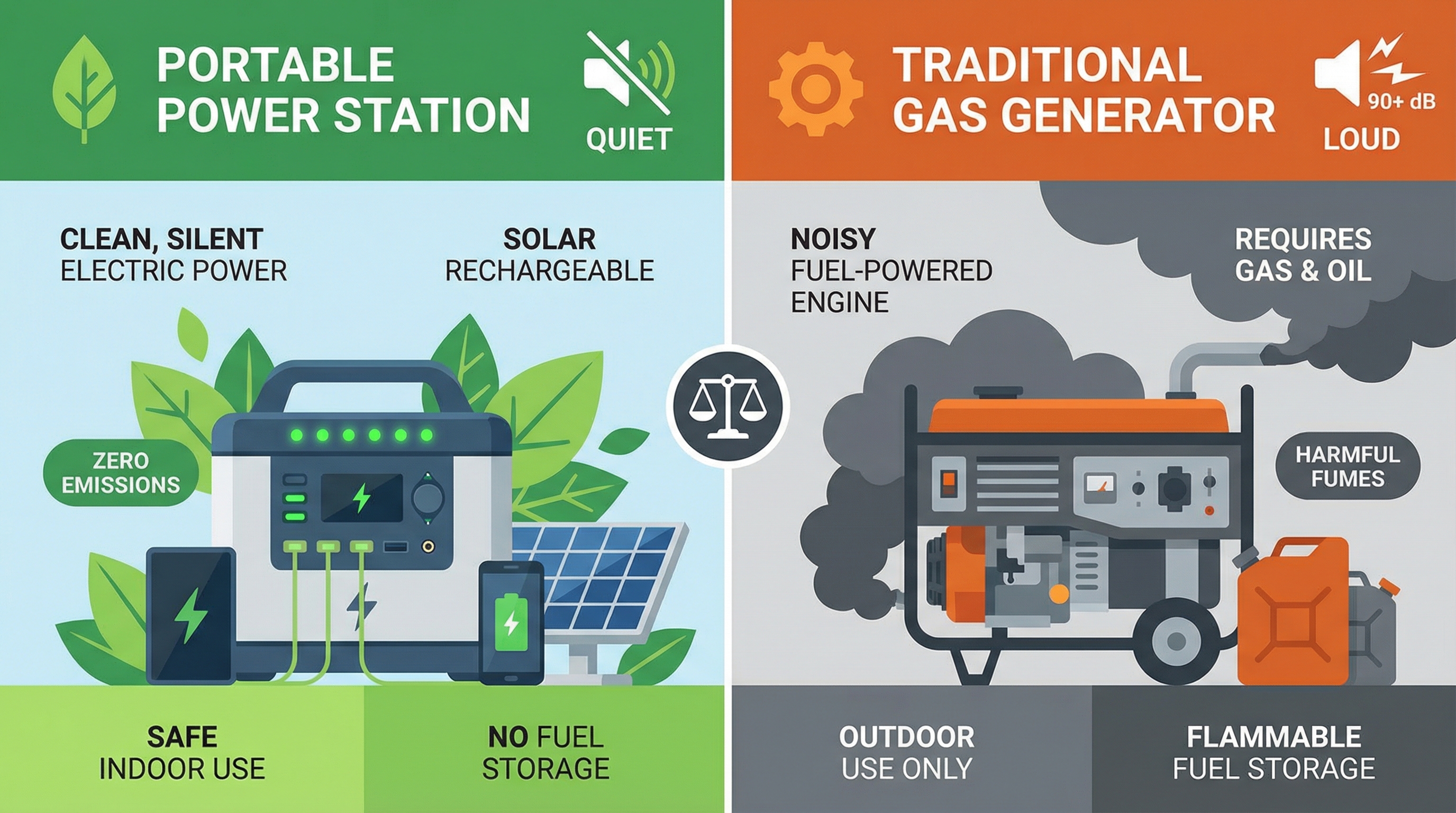
A portable power station is a rechargeable battery-based power source that delivers electricity without fuel combustion, noise, or emissions. Unlike traditional gas generators, these units produce zero emissions, operate silently, and require minimal maintenance.
Why you need one: Whether you're an outdoor enthusiast seeking reliable camping power, a homeowner preparing for grid failures, or someone who values clean energy alternatives, the Quacoa PS210K 1000W Portable Power Station delivers 512Wh of dependable off-grid power in a compact, travel-ready design.
In this comprehensive review, you'll discover:
- Technical specifications and real-world performance data
- Why LiFePO4 battery technology outperforms alternatives
- Nine different ways to power your devices
- How this unit compares to traditional generators
- Which applications suit this power station best
What Is a Portable Power Station and Why Do You Need One?
A portable power station is a rechargeable lithium-based battery system that stores electrical energy for use when conventional power sources are unavailable. These devices integrate sophisticated battery management systems (BMS), multiple output ports, and various charging capabilities in a self-contained, mobile unit.
Key Advantages Over Traditional Generators
| Feature | Portable Power Station | Traditional Generator |
|---|---|---|
| Noise Level | 0-30 dB (silent) | 60-90 dB (loud) |
| Emissions | Zero (indoor-safe) | CO2, CO, fumes |
| Fuel Required | No | Gasoline/propane |
| Maintenance | Minimal | Regular oil changes, carburetor cleaning |
| Lifespan | 3,000+ cycles | 1,000-2,000 hours |
| Warm-up Time | Instant | 30-60 seconds |
Who Benefits Most from Portable Power Stations?
- Outdoor Enthusiasts: Campers, hikers, overlanders, and tailgaters who need silent, clean power
- Emergency Prepared Individuals: Homeowners preparing for power outages and natural disasters
- Remote Workers: Digital nomads and field technicians requiring reliable device charging
- Healthcare Users: People powering CPAP machines, oxygen concentrators, or other medical devices
- Event Organizers: Vendors needing clean power for outdoor events and markets
Quacoa 1000W Portable Power Station: Complete Technical Overview
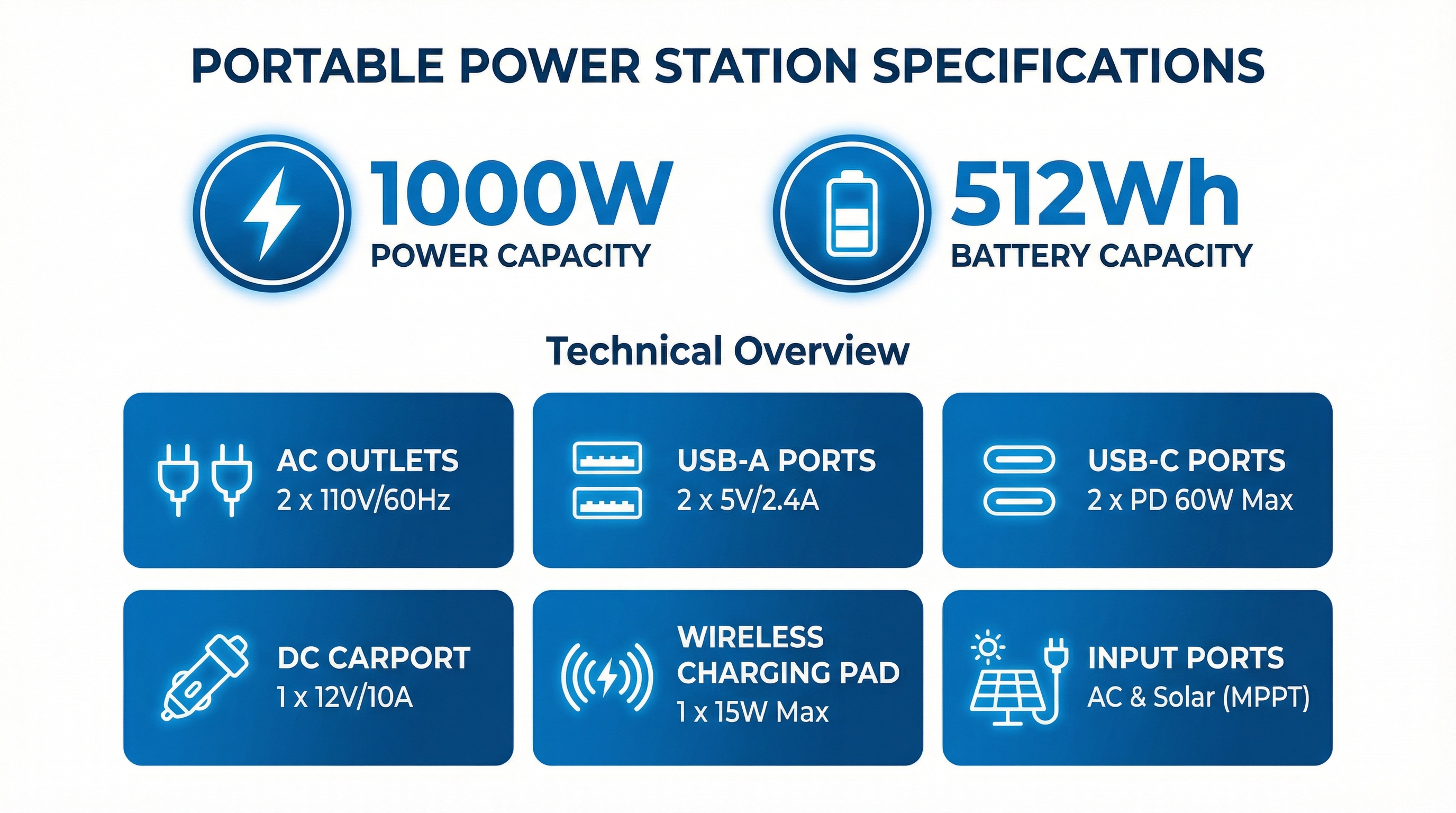
Quacoa PS210K Key Specifications
| Specification | Value |
|---|---|
| Battery Capacity | 512Wh (Lithium Iron Phosphate) |
| AC Output | 1000W continuous (2000W surge) |
| AC Output Waveform | Pure Sine Wave |
| AC Output Voltage | 110V/120V (60Hz) |
| USB-C Output | 100W PD (Power Delivery) |
| USB-A Output | 5V/2.4A (12W max) |
| DC Output | 12V/10A (120W max) |
| Wireless Charging | 15W |
| Solar Input | 200W max (MPPT controller) |
| AC Charging | 500W max |
| Car Charging | 12V/24V compatible |
| Weight | 7.9 kg (17.4 lbs) |
| Dimensions | 340 x 220 x 280 mm |
| Operating Temperature | -10°C to 45°C |
| Battery Chemistry | LiFePO4 (LFP) |
| Cycle Life | 3,000+ cycles to 80% capacity |
Battery Technology: Why LiFePO4 Matters
The Quacoa 1000W Portable Power Station utilizes Lithium Iron Phosphate (LiFePO4) battery chemistry—the gold standard for stationary and portable energy storage applications.
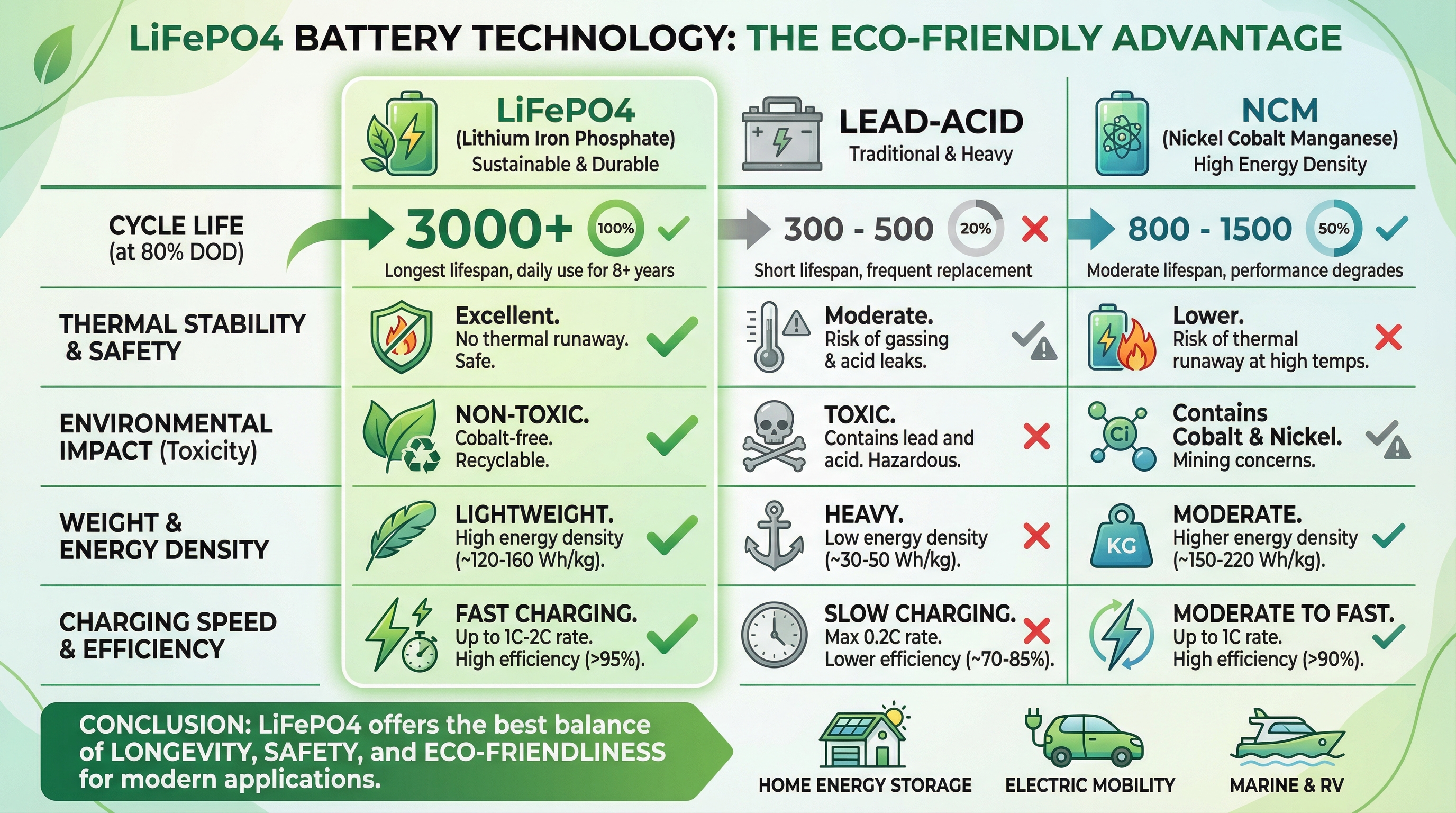
LiFePO4 vs Other Battery Chemistries
LiFePO4 Advantages:
| Battery Type | Cycle Life | Energy Density | Thermal Stability | Safety | Best Use Case |
|---|---|---|---|---|---|
| LiFePO4 | 3,000+ cycles | 90-160 Wh/kg | Excellent | Very High | Portable power stations, solar storage |
| NMC (Lithium-Ion) | 1,000-2,000 cycles | 150-250 Wh/kg | Moderate | Moderate | Consumer electronics, EVs |
| Lead-Acid | 300-500 cycles | 30-50 Wh/kg | Low | Moderate | Traditional backup power, golf carts |
| LTO (Lithium Titanate) | 7,000+ cycles | 70-80 Wh/kg | Excellent | Very High | Industrial, fast-charge applications |
Power Specifications and Real-World Performance
AC Output Performance
The 1000W continuous rated output handles most household devices and outdoor equipment:
Compatible Devices:
- Laptops (45-100W): 8-12 hours of runtime
- Mini refrigerators (50-80W): 6-8 hours
- CPAP machines (30-60W): 8-14 hours
- 40" LED TVs (80-150W): 4-6 hours
- Electric blankets (50-100W): 5-8 hours
- Blender (300-500W): 1-1.5 hours
- Power tools (500-900W): 30-60 minutes
Surge Capacity: The 2000W peak output accommodates appliances with motor start-up currents, such as:
- Refrigerators (compressor surge: 3-5x running wattage)
- Air conditioners (compressor inrush current)
- Pumps and power tools
UPS Mode Functionality
When connected to grid power, the Quacoa PS210K can function as an Uninterruptible Power Supply (UPS) with sub-20ms transfer time, protecting sensitive electronics from power fluctuations and outages.
Charging Options: Flexibility Where It Matters Most
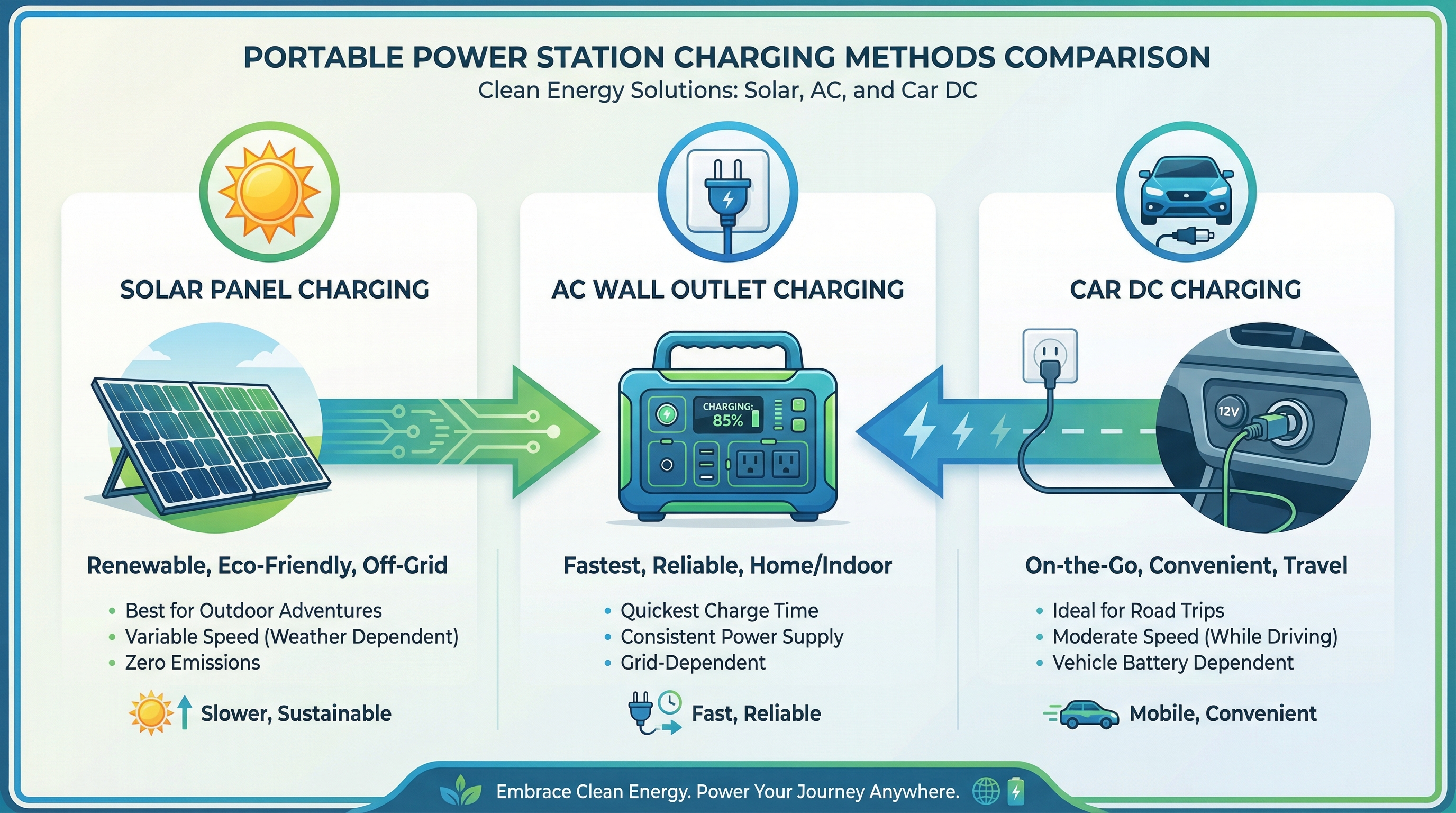
Three Ways to Recharge
1. Solar Charging (200W Max Input)
- MPPT (Maximum Power Point Tracking) controller for 99% solar tracking efficiency
- Compatible with 12V and 24V solar panels
- Fully charges in 3-4 hours with ideal 200W solar input
- Ideal for: Camping, overlanding, off-grid living
2. AC Wall Outlet Charging (500W Max Input)
- Standard household outlet charging
- Fully charges in 1.5-2 hours from 0-100%
- Built-in fast-charge technology
- Ideal for: Home backup preparation, quick turnaround
3. Car Charging (12V/24V)
- Charges while driving using vehicle DC outlet
- Fully charges in 5-8 hours during long drives
- Automatic voltage detection (compatible with most vehicles)
- Ideal for: Road trips, tailgating, mobile charging
Simultaneous Charging and Discharging
The Quacoa PS210K supports pass-through charging, allowing you to power devices while recharging the unit. This is particularly valuable during:
- Daytime solar charging while powering nighttime devices
- Grid-to-station-to-device UPS configurations
- Emergency backup scenarios where uninterrupted power is critical
Output Options: Powering Everything You Need
Nine Integrated Output Ports
| Port Type | Quantity | Specifications |
|---|---|---|
| AC Outlets | 2 | 110V/120V, 1000W continuous (2000W surge) |
| USB-C PD | 2 | 100W Power Delivery each |
| USB-A | 2 | 5V/2.4A, 12W max per port |
| DC 5521 | 2 | 12V/10A, 5.5mm barrel connectors |
| Car Port | 1 | 12V/10A, cigarette lighter style |
| Wireless Pad | 1 | 15W Qi wireless charging |
Device Compatibility Examples
Simultaneous Powering Capability:
- Charge 2 laptops (USB-C, 100W each)
- Power a mini refrigerator (AC outlet)
- Run a CPAP machine (AC outlet)
- Charge 2 smartphones (USB-A)
- Power LED camping lights (DC port)
- Wireless charge 1 smartwatch (wireless pad)
Total output capacity: All ports can operate simultaneously up to 1000W combined AC output + 120W USB/DC combined output.
Safety Features: Protection You Can Trust
Comprehensive Battery Management System (BMS)
The integrated BMS provides industrial-grade protection:
Additional Safety Features
- Pure Sine Wave Inverter: Delivers clean, stable power matching grid quality—safe for sensitive electronics including medical devices
- Low-Noise Design: Fan operates only when thermal monitoring detects need, keeping noise below 30dB during normal operation
- Rugged Housing: ABS+PC composite shell with rubberized corners provides drop protection and flame retardance (UL94 V-0 rated)
- Battery Cell Balancing: Individual cell monitoring ensures uniform charging and discharging across all cells
- Certifications: CE, FCC, RoHS compliant
Applications: Where the Quacoa 1000W Excels
Primary Use Cases
1. Camping and Outdoor Recreation
- Power LED string lights and camping lanterns
- Run portable fans or small heaters (1000W)
- Charge phones, cameras, and GPS devices
- Power electric coolers and refrigeration
- Operate Bluetooth speakers and projectors
2. Emergency Home Backup
- Keep refrigerator running during outages (8+ hours for typical fridge)
- Power communication devices (phones, radios)
- Run CPAP machines continuously
- Operate lights and small appliances
- Charge essential electronics
3. RV and Overlanding
- Park off-grid without sacrificing comfort
- Power appliances at remote campsites
- Maintain battery banks for extended trips
- Run laptops and work stations remotely
4. Job Site Power
- Tool charging stations (drills, saws, etc.)
- Lighting for early morning or evening work
- Power for radios and communication equipment
- Emergency repair situation power needs
5. Outdoor Events and Markets
- Vendor booth power for payment terminals
- Sound system and lighting
- Food preservation and warming equipment
- Customer device charging stations
6. Medical Device Backup
- CPAP machines (8-14 hours typical)
- Oxygen concentrators (4-6 hours)
- Nebulizers and other breathing devices
- Mobility equipment charging
Choosing the Right Portable Power Station: What to Consider
Capacity Requirements
| Usage Scenario | Recommended Capacity |
|---|---|
| Phone/laptop charging only | 200-300Wh |
| Weekend camping with mini fridge | 400-600Wh |
| Extended off-grid or emergency backup | 600-1000Wh |
| Whole-home backup or full-time RV living | 1000Wh+ |
Power Requirements
Calculate your needs:
Example Calculation:
- Laptop (65W) x 6 hours = 390Wh
- Phone charging (10W) x 4 hours = 40Wh
- Mini fridge (60W) x 10 hours = 600Wh
- LED lights (20W) x 5 hours = 100Wh
- Total Daily Need: 1,130Wh
For this usage pattern, consider a unit with 1000Wh+ capacity or reducing device usage.
Key Selection Criteria
Must-Have Features:
- LiFePO4 battery chemistry (longest lifespan)
- Pure sine wave inverter (device safety)
- Multiple output port types (versatility)
- MPPT solar controller (efficient solar charging)
- BMS with comprehensive protections
Nice-to-Have Features:
- Wireless charging pad
- UPS mode with fast transfer
- Expandable capacity (parallel connection)
- Remote control via smartphone app
- Expandable solar input
Maximizing Your Power Station Investment
Extended Battery Life Practices
Solar Panel Sizing Guide
| Daily Power Need | Recommended Solar Input | Full Recharge Time |
|---|---|---|
| 200Wh | 60-100W | 3-4 hours |
| 400Wh | 100-150W | 4-5 hours |
| 512Wh (full capacity) | 150-200W | 3-4 hours |
Recommended Panel Configuration:
- Single 200W panel for fastest charging
- Two 100W panels wired in parallel for partial shade tolerance
- Portable foldable panels for camping versatility
Why Choose the Quacoa PS210K 1000W Power Station
Competitive Advantages
1. Premium LiFePO4 Battery Technology
- 3,000+ cycle lifespan equals 8-10 years of regular use
- Superior safety profile with thermal stability
- Environmentally responsible chemistry
2. Versatile Power Delivery
- 100W USB-C PD ports (fast charge modern laptops)
- 15W wireless charging (simplify bedside charging)
- Dual AC outlets (power multiple devices)
- Multiple DC options (automotive compatibility)
3. Fast Recharging Flexibility
- 500W AC input recharges in 90 minutes
- 200W solar input enables complete off-grid independence
- Car charging ensures power availability during travel
4. Professional-Grade Inverter
- Pure sine wave output protects sensitive electronics
- 2000W surge capacity handles motor-driven devices
- Consistent voltage maintains device performance
5. Compact and Portable Design
- 17.4 lbs weight for 512Wh capacity (competitive ratio)
- Integrated carrying handle
- Dimensions fit standard vehicle cargo spaces
6. All-Weather Reliability
- Operating range from -10°C to 45°C
- BMS protects against extreme conditions
- Flame-retardant housing materials
Frequently Asked Questions
How long does the Quacoa 1000W power station last?
The LiFePO4 battery provides 3,000+ charge cycles before reaching 80% capacity. With typical weekly use (one full cycle), this translates to approximately 8-10 years of reliable service. After 3,000 cycles, the battery will still function but at reduced capacity (80% of original).
Can I use this power station indoors?
Yes. Unlike gas generators, the Quacoa PS210K produces zero emissions and operates silently, making it completely safe for indoor use. It's ideal for apartments, condos, and enclosed spaces like garages and basements.
What's the difference between 1000W continuous and 2000W surge?
1000W continuous is the power level the unit can sustain indefinitely. 2000W surge (also called peak power) handles temporary power demands from devices with motor start-up currents, such as refrigerators, air conditioners, and power tools. Surge capacity typically lasts 1-5 seconds.
Can I charge the power station while powering devices?
Yes. The Quacoa PS210K supports pass-through charging, allowing simultaneous input and output. This is particularly useful for UPS applications and when using solar during daytime.
Is this power station compatible with all solar panels?
The MPPT controller accepts 12V and 24V solar panels with an input range of 12-50V. Maximum solar input is 200W. Ensure your panels' open-circuit voltage doesn't exceed 50V, and use appropriate connectors (MC4 adapters may be required).
How quiet is the Quacoa power station during operation?
The unit operates at 0-30 decibels depending on load and thermal conditions. At low loads, it's essentially silent. The cooling fan only activates during high power output or elevated temperatures and remains quieter than a whisper.
Can I use this to power my CPAP machine?
Yes. The pure sine wave inverter safely powers CPAP machines. At 60W average consumption, expect 8-9 hours of runtime. The included AC outlets provide the clean power required by sensitive medical devices.
What's included in the box?
- Quacoa PS210K 1000W Portable Power Station
- AC charging cable
- DC car charging cable
- User manual and warranty card
Solar panels and MC4 adapters are sold separately.
Does it come with a warranty?
The Quacoa PS210K includes a 3-year manufacturer warranty covering defects in materials and workmanship. The LiFePO4 battery is covered for 3 years or 3,000 cycles, whichever comes first.
Conclusion
The Quacoa 1000W Portable Power Station represents a compelling balance of capacity, versatility, and longevity for anyone seeking reliable off-grid power. Its LiFePO4 battery technology delivers industry-leading cycle life, while the comprehensive port selection—including 100W USB-C PD and 15W wireless charging—accommodates virtually any device.
Whether you're a weekend camper wanting to run a mini fridge and charge electronics, a homeowner preparing for emergency outages, or an overlander seeking independence from hookups, the PS210K provides 512Wh of clean, silent, safe power in a portable package.
Key Takeaways:
- 3,000+ cycle LiFePO4 battery equals 8-10 years of regular use
- 1000W continuous / 2000W surge handles 95% of portable power needs
- Nine output options including 100W USB-C PD and wireless charging
- Three recharging methods: AC (1.5 hours), Solar (3-4 hours), Car (5-8 hours)
- Pure sine wave inverter protects sensitive electronics
- Zero emissions, silent operation, indoor-safe design
Ready to power your adventures?
Get the Quacoa 1000W Portable Power Station today and experience reliable, clean energy wherever you go. Perfect for camping trips, emergency backup at home, RV adventures, job sites, and outdoor events.